

The American Auction Boom and the VIN Problem
image for illustrative purpose
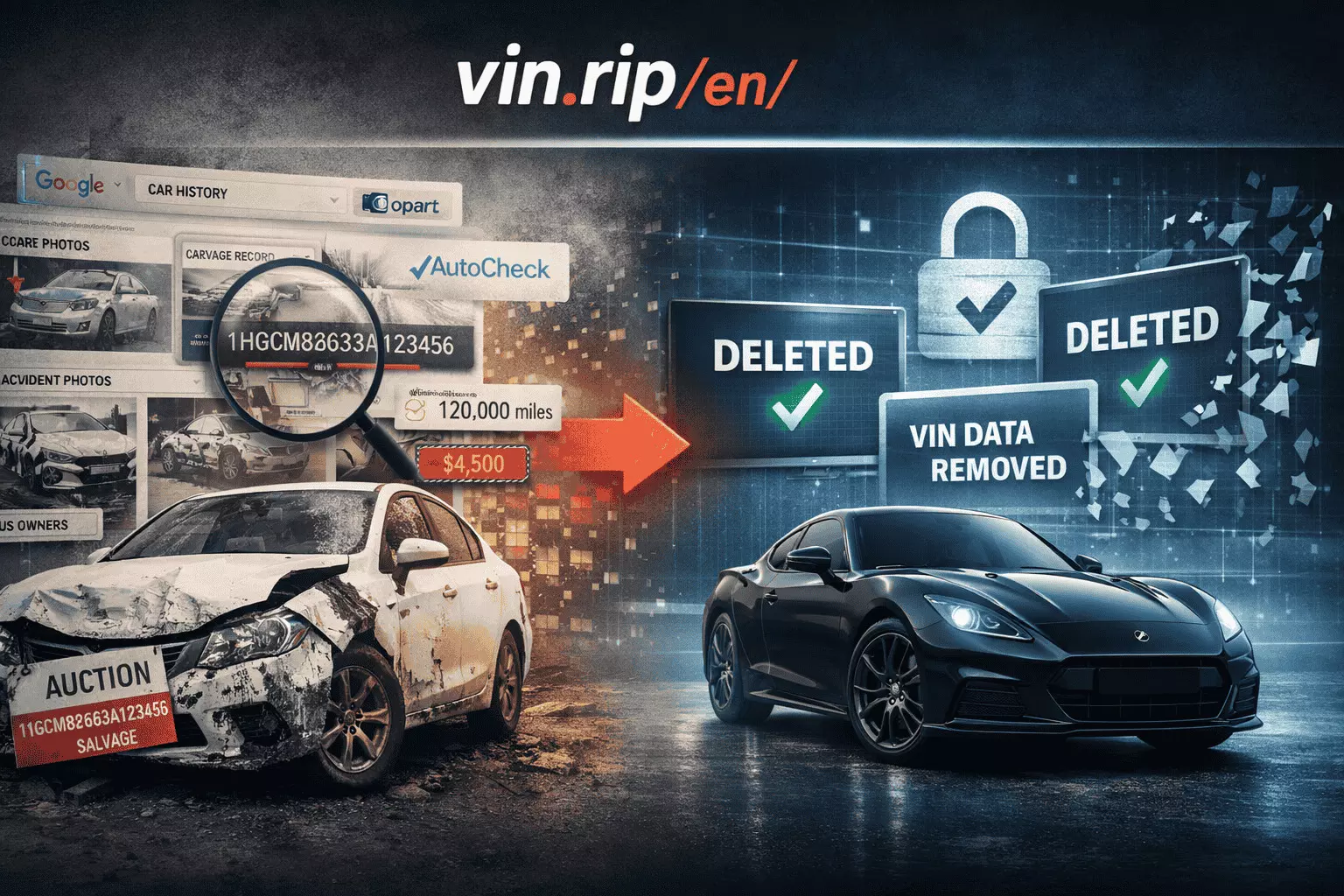
The past 20 to 30 years have seen the purchase of cars in U.S auctions as a niche hobby, to a worldwide obsession. Copart, IAAI, Manheim, Cars.com - cars are sold in millions each year through the platforms. The prices are favorable, the logistics are simplified and the supply is unlimited.
But there’s a catch.
Each and every car auction has an oil spill left behind.
Photos. Hammer price. Mileage. Damage reports. Insurance payouts. Previous owners. All that is easily indexed and can be searched on one thing: the VIN number. Enter it in Google and that brand new car which was imported by you is already a participant in some minor conflict.
That’s where vin.rip comes in.
Why VIN History Removal Is No Longer Optional
A contemporary car does not simply just exist on the road. It exists online. And online, it never forgets.
Exposing VIN information implies:
- Customers can Google VIN within 5 seconds.
- Immediately auction photos re-appear.
- The old damage is a killer to resale by 10-30%.
- The data on the ownership privately held is publicized.
This is the reason why aggressive keywords are important:
- VIN history removal
- delete VIN from Google
- purge car history of the Internet.
- VIN data cleanup
- erase auction records
This isn’t about deception. It is regarding the elimination of privately owned property information that never should have been publicly unlimited.
What vin.rip Actually Does (With Numbers)
vin.rip/en/ is no forum gimmick and no report abuse button spurt. It is an expert moving company that is result-oriented.
Concrete facts:
- VIN cleanup begins during the 24-48 hours.
- Mean period of removal: 7-21 days based on site volume.
- Works with Google, Bing, Yahoo
- Deletes auction site and aggregator data, mirror sites.
- Miles, damage reports, covers photos, prices.
- The price is determined by the size of VIN footprint (typically $99-399).
The outcome: searches do not find anything useful. No photos. No auction scars. No digital baggage.
Can You Delete VIN History Yourself? Technically. Realistically? No.
Yes, in theory, anyone can try:
- Filing DMCA requests
- Getting in touch with dozens of websites.
- Arguing with content farms
- Taking weeks to be automatedly rejected.
In practice:
- Auction websites do not react.
- Mirror sites re-publish data
- Google needs source level elimination.
- A single omission of a site restores it all.
Professional VIN cleanup services know how data spreads. vin.rip eliminates the cause, not only the symptom. That is all between covering up dust by the carpet and taking it out of the house.
How to Remove Car History with vin.rip
It is a cleansing process, a process that is ruthlessly efficient:
- Go to vin.rip
- Enter the VIN number
- Audit identified web sites and information sources.
- Select a mode of payment and verify.
- Monitor user dashboard progress.
- Email confirmation of removal expressed.
No phone calls. No paperwork. No guesswork.
The End Result: A Car Without a Digital Shadow
Once the history of the VIN is deleted, the car is what it always used to be:
- Just a car
- Not a Google crime scene
- Not an auction slideshow
- not a social mine of individual property.
In a place where customers do their research prior to advertisement of the vehicle, clean VIN history is not cosmetic. It’s financial.
And vin.rip is there only to that effect:
so that your car history does not leave the confines of your computer anywhere on the Web.





